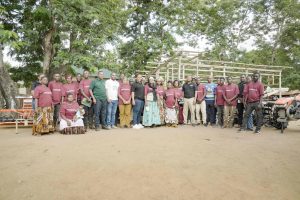

 Malinyi, Morogoro — Strategic partnerships are at the heart of transforming agriculture, and the collaboration between PASS Leasing, a PASS Trust mechanisation arm, and Norges Vel is delivering tangible impact for smallholder farmers in Malinyi District.
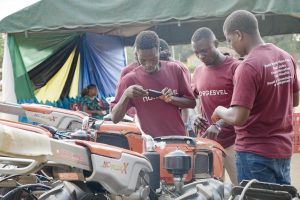
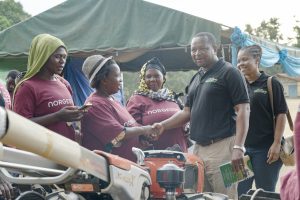
Under this partnership, five organised farmer groups supported by Norges Vel in collaboration with Nafaka Kilimo have been equipped with five power tillers complete with essential implements – cage wheels, disc ploughs, rakes, mould board ploughs, and trailers. The beneficiary groups namely New Generation, Time of Success, Mtimbira Warriors, Vijana na Maendeleo, and Furaha Leo, include one all-women group and four youth-led groups, underscoring a strong commitment to inclusive, climate-smart agribusiness growth.
The intervention directly supports Norges Vel’s Inclusive Rice Value Chain approach, which focuses on improving productivity, climate resilience, and market participation for smallholder rice farmers, with women and youth at the centre. By combining this value-chain support with PASS Leasing’s innovative, collateral-free equipment financing model, the partnership is accelerating adoption of mechanised farming, reducing labour toil, and strengthening farmer groups as viable agribusiness enterprises.
Aligned with Tanzania’s agricultural transformation agenda, regional and global priorities on food security, youth employment, women’s economic empowerment, and climate-smart agriculture, the initiative offers a scalable model for impact. All equipment has been delivered in good condition, with documentation completed, laying a strong foundation for sustainability.
Anchored in a formal collaboration framework between the two institutions, the partnership is expected to scale to other regions where Norges Vel operates, expanding access to mechanisation and finance. For PASS, the initiative directly advances its mission to transform lives through agriculture, proving that when partnerships work, mechanisation becomes not just a tool, but an opportunity for lasting livelihood transformation.